
UT Austin | The Need | Community-Engaged Trauma-Informed
Edit Headline Text
Edit Subhead Text
Credit: Gregory Pogue
An Offering:
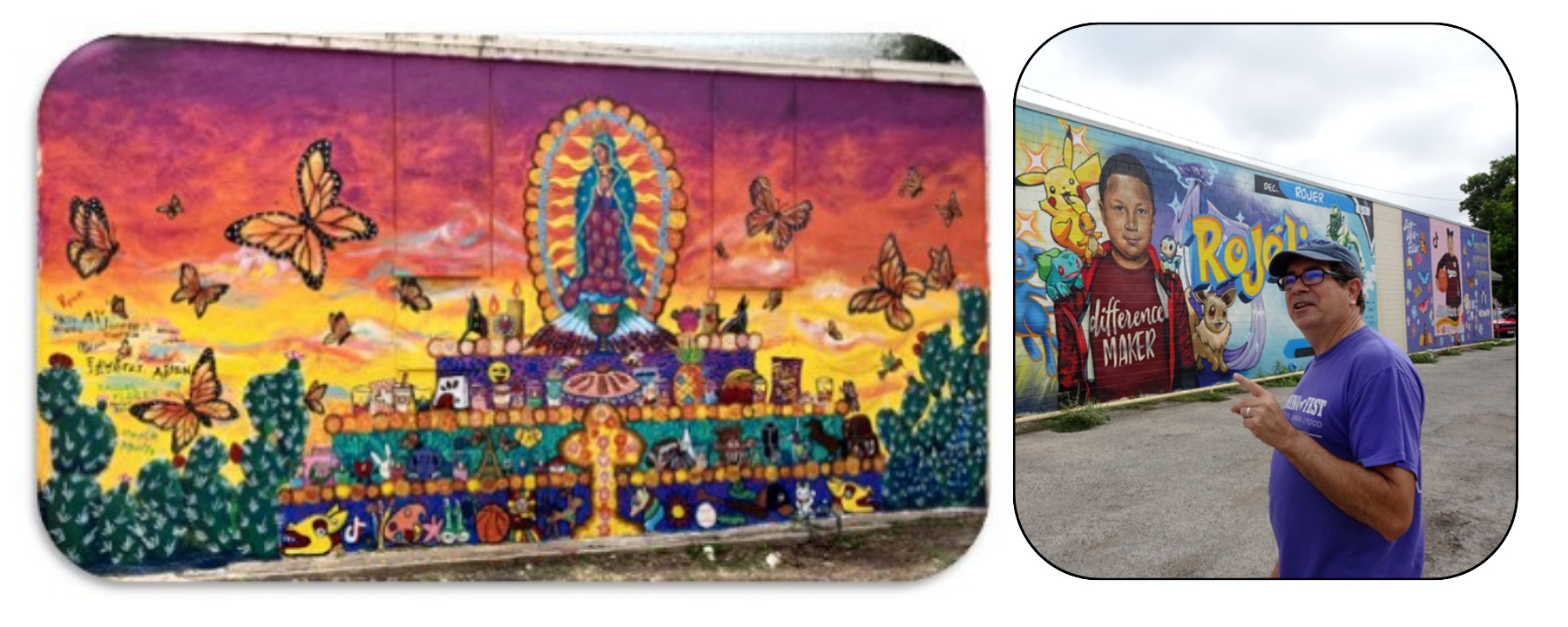
The UT-Uvalde research team honors and memorializes those who lost their lives in the Robb Elementary tragedy, as well as those who were injured and present, and all who continue to love and care for them. Our work is an ongoing effort to support families and communities in Uvalde.
How can you help?
Your support can make a significant difference. Here are some ways you can contribute:
- Volunteer your time: Join our community outreach programs.
- Support our work: Financial contributions help us fund essential services and research.
- Spread awareness: Share our mission and efforts with your network.
- Offer expertise: If you have skills or knowledge that could benefit our work, please get in touch.
The Need:
Approximately 66 million Americans, or 20% of the population, live in rural communities that are particularly vulnerable and poorly equipped to handle mass violence.
- In 2020, nearly 200 out of 254 counties in Texas, including Uvalde, were classified as mental health deserts. Government agencies and nonprofits need research and evidence-based solutions to support these rural communities.
- The citation: 1 Hogg Foundation for Mental Health (2020, November). A guide to understanding mental health systems and services in Texas (5th Edition). Retrieved from https://hogg.utexas.edu/wp-content/uploads/2020/12/MentalHealthGuide-5thEdition.pdf
The most recent data from the Texas Department of State Health Services suggest that out of the 254 counties in the state, 170 did not have a single licensed psychiatrist. An additional 23, including Uvalde County, had only one psychiatrist to serve the entire population.
Citation:
Texas Department of State Health Services. (2024, February). Health Profession Supply, Psychiatrist by County, 2023. https://healthdata.dshs.texas.gov/dashboard/health-care-workforce/hprc/health-profession-supply
Podcast: IN THE THICK: Healing in Uvalde
By: In The Thick |Part of " Uvalde, Resisting and Rising "Published on: June 8, 2023
"Maria and Julio reflect on the one-year anniversary of the school massacre in Uvalde, Texas and the lasting impacts on the community. We go deeper in our roundtable to look at how families of victims– especially mothers, both past and present, bring about change."

Photo Credit.
How a Texas Professor Used Art to Honor Uvalde’s Lost Kids | FRONTLINE
By: Futuro Investigates |Part of " Uvalde, Resisting and Rising " Published on: July 24, 2023
Add Video Headline Here
Add video description here.
Background of Project:
In the aftermath of the devastating Robb Elementary School shooting in Uvalde, Texas, the community was thrust into a crisis of unprecedented magnitude, compounded by profound trauma, pervasive stigma, and a severe lack of resources. While national attention poured in following the tragedy, it is clear that a long-term, comprehensive response is urgently needed to address the ongoing and complex challenges the community still faces. We aim to respond to these challenges with an impact-driven, trauma-informed approach that prioritizes community engagement, mental health awareness, and sustainable solutions.
This proposal is not only about healing those directly impacted by the tragedy, but also to address the deep-seated issues of poverty, limited access to essential services, and systemic neglect that plague rural communities. Through this work, we aim not only to provide immediate relief but also to build lasting knowledge, tools, and strategies that can better address the needs of those impacted by mass shootings. Our mission is to stand in solidarity with Uvalde—both in its healing process and in the creation of a national framework for addressing the complex needs of rural communities facing mass violence. We seek to transform Uvalde into a beacon of recovery and resilience, using the lessons learned to inform policies, practices, and support systems that can help prevent and heal the wounds of violence in Uvalde and other rural communities affected by similar tragedies.
The Challenges:
The tragedy at Robb Elementary School left Uvalde’s residents grappling with an overwhelming loss, compounded by long-standing vulnerabilities. Despite an outpouring of support, the challenges that the Uvalde community still faces are staggering. The current response has failed to adequately address the unique demographic, social, and cultural context of the community. Multiple factors have exacerbated the difficulties of recovery:
- Limited Resources and Infrastructure: Using the Centers for Disease Control and Prevention’s Social Vulnerability Index, Uvalde County scores as high or highest vulnerability in all categories: Household Characteristics, Socioeconomic Status, Racial and Ethnic Minority Status, and Housing Type and Transportation. Uvalde faces deep systemic poverty, with a median household income 23% below the state average. Over 80% of students in Uvalde are economically disadvantaged, and 70% are at risk of dropping out. A lack of broadband access and medical professionals, coupled with limited mental health services, leaves the community ill-equipped to respond to the ongoing needs of its residents.
- Mental Health Crisis: Uvalde, already experiencing high rates of suicides and mental health challenges prior to the shooting, faces an acute shortage of trained mental health professionals. There is a significant lack of cultural competency and trauma-informed care, and many residents continue to struggle with mental health stigma. This stigma is particularly pervasive in rural communities where mental illness is often misunderstood or ignored.
- Historical and Structural Inequities: Years of underfunding and the misallocation of resources have resulted in inadequate health services, lack of job opportunities, and poor educational outcomes. These conditions have compounded the trauma experienced by the community in the wake of the school shooting. Moreover, systemic issues like gender inequality, ineffective policing strategies, and historical betrayals by institutions further hinder the recovery process.
- National Crisis in Rural America: Uvalde is not alone. With 20% of Americans living in rural communities, many of which face similar vulnerabilities, Uvalde’s crisis reflects a larger issue. These communities are often ill-prepared to respond to mass violence, and there is a pressing need for evidence-based solutions that are tailored to rural contexts.
Additional updated data, but not by County:
Mental Health and Substance Use Workforce Shortage
As of June 30, 2020, an analysis by the US Health Resources and Services Administration (HRSA) of mental health professional shortages showed that Texas had only met about 36 percent of the state’s need. In 2019, 173 Texas counties did not have a single licensed psychiatrist, which left over 2.7 million Texans living in counties without access to a psychiatrist. An additional 24 counties only had one psychiatrist, serving over 970,000 individuals.
Texas Health Data, in 2023 Texas Department of State Health Services suggests that out of the 254 counties in the state, 170 did not have a single licensed psychiatrist. An additional 23, including Uvalde, had only one psychiatrist to serve the entire population.
Citiations:
https://healthdata.dshs.texas.gov/dashboard/health-care-workforce/hprc/health-profession-supply
Policy Environment | Hogg Foundation for Mental Health
Photo Credit.