
Alumni Perspectives
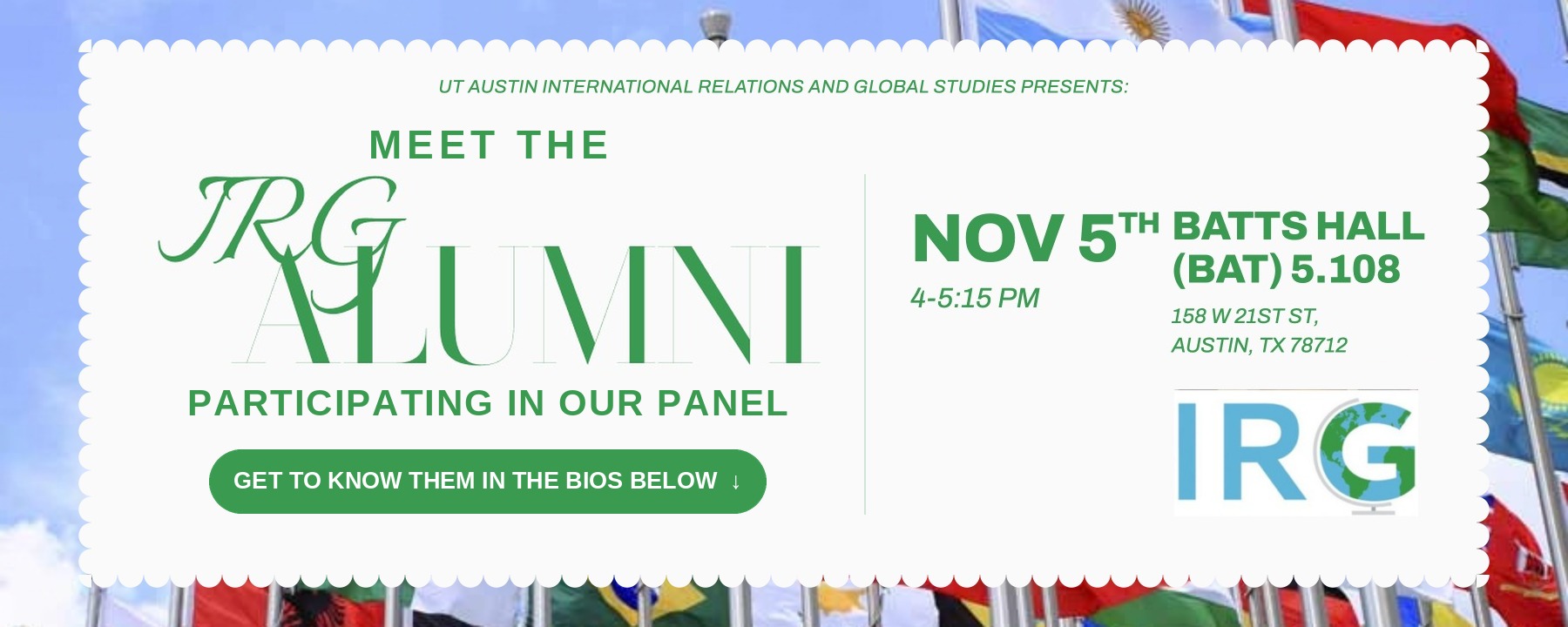

This caption describes the image above.
Lillian Mauldin
What is your current career path?
After graduation, I worked for a direct service nonprofit in Dallas, and then for the City of Dallas Office of Government Affairs. During my work at the city, my nonprofit that I co founded with UT colleagues 3 years prior became fully funded by the Carnegie Corporation of New York, and I left my job in government affairs to work full time directing Women for Weapons Trade Transparency (W2T2). Under this grant from the Carnegie Corporation, W2T2 became a sponsored program of the Center for International Policy, and our team broke the first ever reporting and research on the 1122 Program, an obscured pipeline of police militarization. We compiled a dataset of purchases made via the 1122 program using FOIA and open records requests, and we worked with U.S. Senate offices to pass legislation to mandate federal reporting and regulation of 1122. When our research grant ended, I knew I wanted to continue my work in police accountability, but I saw more feasibility of effective change in a local public service capacity. As such, I am now working as a Policy Analyst for the City of Austin's Police Oversight office, which conducts independent investigations into Austin Police Department misconduct and recommends policy changes to increase accountability and transparency of APD. Having worked in both the nonprofit and local government sectors in two different Texas cities, my experiences inform one another and have allowed me to directly improve policy on issues that I care deeply about.
What experiences in the IRG program were particularly meaningful to you?
The research opportunities afforded to me through IRG were incredibly beneficial to my career and to my understanding of the academic research process. On multiple occasions, I assisted professors with their own research through coding data, writing summaries of relevant legal or historical timelines, or using my Arabic language skills I learned through classwork to translate source data. I encourage IRG students to reach out to their professors and inquire about research assistantship opportunities. This is a fantastic way to develop your skills and subject matter expertise, apply what you are learning in your courses, and gain experience to add to your resume or CV!
What advice would you give current students?
If you're planning to enter the job market after graduation, try to strike a balance between pursuing what interests you and what gets your foot in the door as a starting point for your career. If you have a curiosity, follow it. In today's challenging and ever changing job market, there are increasingly more ways to work non traditionally and create your own income stream or your own job. If that interests you, be creative and try it out! Don't be afraid to cold email people you want to learn from and ask them to speak with you. That's how I got W2T2 off the ground, and as annoying as the advice to "network" is, it often works. But your outreach should be coming from a desire to to learn or collaborate; if it feels transactional, people are going to be less willing to help. You may also need to take jobs that don't align with your goals to make ends meet. When I re-entered the job market after directing my nonprofit, I had to work as a pet sitter to pay my rent and my bills. This kind of "in between" work isn't glamorous and can feel like a let down after spending so much time and effort working on projects you are passionate about, but in today's era of layoffs, downsizing, and budget cuts, it is definitely not uncommon. But fear not, there is a light at the end of the job search tunnel! It will take time and effort to get your "dream job", but don't lose sight of your goals, your values, and all the other things and people that give you purpose in the meantime.
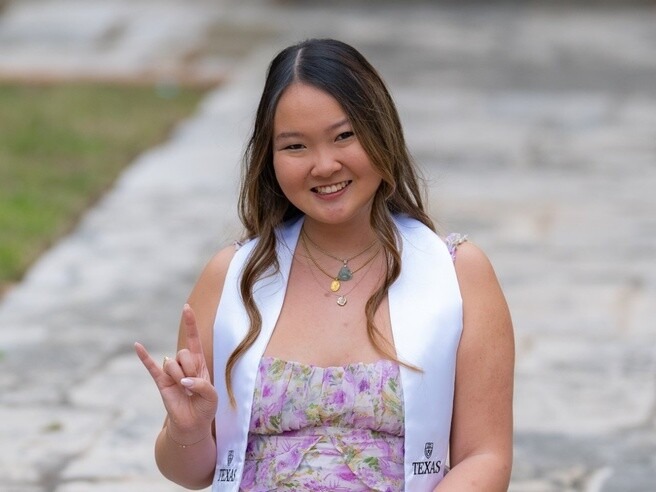
This caption describes the image above.
Emma Guan
What is your current career path?
I began pursuing my J.D. here at Texas Law directly after graduating from UT’s IRG program. After my first year of law school, I spent my summer as a summer associate at Latham & Watkins’ Austin office. During my first summer, I sought out experiences in various practice areas, particularly emerging companies, capital markets, and data and technology transactions. I hope to eventually build a career in transactional law here in Austin.
What experiences in the IRG program were particularly meaningful to you?
One of my most meaningful experiences as an IRG student was the opportunity to spend a summer studying abroad in Paris, France. I appreciated how flexible the IRG program is in enabling students to choose a wide variety of study abroad opportunities, as I was able to study courses in fashion and art history through an affiliate program. Being abroad gave me a new perspective on the meaning of my education in international relations and through my program, I met some of my closest friends. I also really enjoyed my capstone studies. My capstone research allowed me to combine my passion for international relations with my love for art history while developing research and argumentation skills that helped me throughout the rest of my undergraduate studies. As I continue my education in law school, the skills I developed through my capstone have helped me immensely and I have even had the opportunity to build on my capstone education in my law school coursework.
What advice would you give current students?
Take advantage of the interdisciplinary nature of the IRG degree and don’t be afraid of pursuing a unique path. There are some paths in IRG that are more commonly chosen, and while it can be tempting to follow the crowd, IRG allows you to explore your own passions and build your education around them. Between the opportunities to study abroad, take a wide range of courses, and pursue amazing interdisciplinary programs like the Brumley Scholars program, I found that IRG really enabled me to still develop my passion for art and culture even while completing a degree in international relations. There are so many opportunities out there, and it’s never a bad idea to reach out and see where they take you!

This caption describes the image above.
Andrea Dominguez
What is your current career path?
After graduating from UT, I joined the Global Customized Programs team at Texas Global as a Program Assistant supporting the Mandela Washington Fellowship, a U.S. Department of State exchange program for young African leaders. In my current role as a Program Coordinator for Global Customized Programs, I manage a variety of grant and custom international exchange programs that bring participants from Latin America, Southeast Asia, Europe, Africa, and the Middle East to UT Austin. My role combines program management and event planning to create meaningful experiences for global leaders.
What experiences in the IRG program were particularly meaningful to you?
One of the most meaningful aspects of the IRG program was the ability to tailor my degree to my specific interests. The Culture, Media, and Arts track allowed me to take courses that deepened my understanding of cultural differences and global perspectives, which continues to inform my work today. I also had the opportunity to study abroad in Paris and intern at a nonprofit organization in Madrid, experiences that gave me valuable firsthand exposure to living and working in different cultural environments. Those experiences strengthened my interest in cultural exchange and ultimately helped guide me toward my current career in international education and exchange programs.
What advice would you give current students?
Take advantage of the flexibility of the IRG program and don't feel like your degree has to look exactly like anyone else's. Explore courses, student organizations, internships, and study abroad opportunities that align with your interests, even if you're still figuring out your long-term career goals. Connect with professors, alumni, and other mentors on campus, as they can provide valuable guidance and help you learn about opportunities after graduation you may not have considered.

This caption describes the image above.
Lila Al-Kassem
What is your current career path?
I currently work in Corporate Responsibility at IBM as part of its global project management office. Prior to this, I worked in management consulting at Deloitte Consulting.
What experiences in the IRG program were particularly meaningful to you?
The opportunity to surround myself with diverse perspectives and craft my educational journey based on my interests was invaluable. In particular, becoming a research assistant to IRG faculty and staff was formative in helping me discover my interests and eventual career path.
What advice would you give current students?
Be open to all opportunities! The saying “rejection is misdirection” may sound cliche, but it has proven to be true in my experience.

Amy Guan, Class of
Amy Maldonado
What is your current career path?
I'm a program/project manager and in the "learning phase" of this role. I'm currently building out a fellowship program in partnership with the Department of Defense. In short, candidates are in their final 180 days of their military career and the fellowship bridges their service alongside civilian work for an easier transition.
What experiences in the IRG program were particularly meaningful to you?
Having classes where group discussion was a must and studying abroad. I learned the most about the topic when we engaged in discussion. Studying abroad was an experience, considering that I didn't know the language, and it was my first time flying. It taught me that making an effort counts, but also the ultimate way for me to figure things out when I was out of my comfort zone.
What advice would you give current students?
Be curious in what you do and where you go. Asking questions will get you positively noticed and you'll learn a great deal in any career you build. If you have the bandwidth, raise your hand for the opportunity. It gets you exposure to people, ideas, and opens the door to future opportunities