
Graduate Awards
Every year, the Department of Rhetoric and Writing presents awards to graduate students for excellence in teaching, scholarship, and service:
- The Maxine Hairston Prize for Excellence in Teaching
- The James L. Kinneavy Prize for Scholarship in Rhetoric and Composition
- The John Slatin Prize for Electronic Media in Education
- The Will Burdette Graduate Student Service Award
Maxine Hairston Prize for Excellence in Teaching
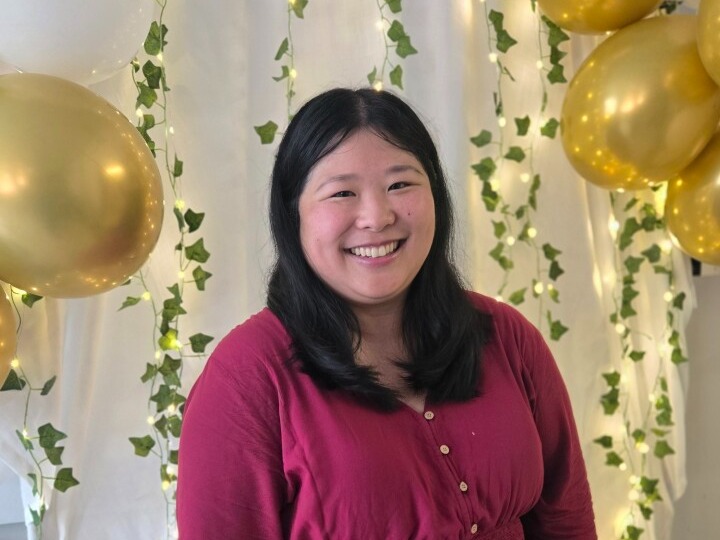
Acacia Chan, Ph.D. Student in Comparative Literature
Maxine Hairston is considered one of the architects of contemporary rhetoric and composition. She served as the University of Texas at Austin's Director of Composition in the early 1970s.
The prize named for her is awarded each year to an outstanding graduate student instructor.
2025-2026 Winner: Acacia Chan
The committee awared the 2026 Maxine Hairston award to Acacia Chan in recognition of exemplary course design and delivery. Acacia Chan’s gutsy pedagogy and innovative course rigorously center students. What distinguishes this course is the abundant creativity and care guiding its structure, specifically how students receive multiple routes into the materials and assignments. Chan’s flexible approach reflects a sincere commitment to accessibility, and it underscores her ability to create content that meets students where they are while inspiring their interests and confidence in gaining new knowledge and skills. Chan’s responses to student feedback exhibit not only reflexive teaching but also the active learning of an enthusiastic instructor.
- Previous Winners - 2020s
2024-2025 Jo Hurt 2023-2024 Alexandra Gunnells 2022-2023 Autumn Reyes 2021-2022 Hannah Hopkins 2020-2021 Aycan Ackamete - Previous Winners - 2010s
2019-2020 Rosy Mack 2018-2019 Jessica Rubin 2017-2018 Amrita Mishra 2016-2017 James Garner 2015-2016 Laura Thain 2014-2015 Dustin Hixenbaugh 2013-2014 Kendell Gerdes 2012-2013 Rachel Mazique 2011-2012 Chris Ortiz y Prentice 2010-2011 Connie Steel - Previous Winners - 2000s
2009-2010 Sean McCarthy 2008-2009 Anna Stewart 2007-2008 Michelle Neely 2006-2007 Joey Taylor 2005-2006 Lacey Donohue 2004-2005 Zachary Dobbins 2003-2004 James Warren 2002-2003 Lee Rumbarger 2001-2002 Leta Deitholf 2000-2001 Peter Caster - Previous Winners - 1990s
1999-2000 Vimala Pasupathi 1998-1999 Erik Lupfer 1997-1998 Robert Hornback 1996-1997 Andrew Osborn 1995-1996 Bret Benjamin 1994-1995 Daniel Anderson 1993-1994 Christy Friend - Accordion 5Panel 5. Add body text in this space.
James L. Kinneavy Prize for Scholarship in Rhetoric and Composition
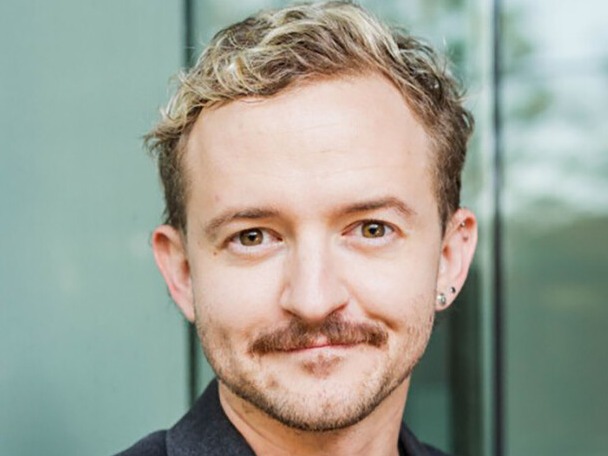
Jake Garner, Ph.D. student in Rhetoric and Writing.
James Kinneavy taught at UT Austin for 33 years in the Departments of English and Curriculum and Instruction, as well as the Division of Rhetoric and Composition.
This award encourages excellent scholarship from those preparing to study and teach rhetoric and composition. It honors the substantial contributions of James Kinneavy to rhetorical and composition theory, to the revitalization of these disciplines nationally, and to the study and practice of rhetoric and composition at The University of Texas.
2025-2026 Winner: Jake Garner
Paper: "Diachronic Methodologies: Considerations of Change at the Intersection of Rhetoric and Memory Studies"
The committee awarded Jake Garner the 2025-2026 Kinneavy prize. The committe noted it's unusual to have a book review submitted as a Kinneavy Award candidate. As one reviewer said, it’s a difficult genre. The committee appreciated the depth of this review and its engagement with the three texts it reviews: As another reviewer remarked, “The author identifies how each book's analysis differs — one localized, one ideological, one networked — and sketches out how these can inform rhetorical explorations of memory by ‘attending not just to static sites but to the chronotopic interrelations and tensions that animate cultural remembrance.’”
As a third reviewer said, this review exposed “interesting interdisciplinary potentials between rhetoric, memory studies, and post-structuralist thought.” The fourth reviewer added, “I appreciated the detailed analysis that clearly connects complex ideas across the three works.
- Previous Winners - 2020s
2024-2025 Jade Shiva 2023-2024 Tristan Hanson 2022-2023 Kimberlyn Harrison 2021-2022 Maclain Scott 2020-2021 Stephen Dadugblor and Matthew Breece - Previous Winners - 2010s
2019-2020 Tristin Hooker 2018-2019 Justin Hatch 2017-2018 Jake Cowan 2016-2017 James Garner 2015-2016 Kendall Gerdes 2014-2015 Mary Hedengren 2013-2014 Eric Detweiler 2012-2013 Doug Coulson 2011-2012 Megan Eatman 2010-2011 Andrew Rechnitz - Previous Winners - 2000s
2009-2010 Dale Smith 2008-2009 Rodney Herring 2007-2008 Jim Brown 2006-2007 James Warren 2005-2006 Jan Fernheimer 2004-2005 Sue Mendelsohn 2003-2004 Jenny Edbauer 2002-2003 Robert Brown 2000-2001 Julia Garbus - Previous Winners - 1990s
1999-2000 David Gold 1998-1999 Michael Erard 1997-1998 Joanna Wolfe - Accordion 5Panel 5. Add body text in this space.
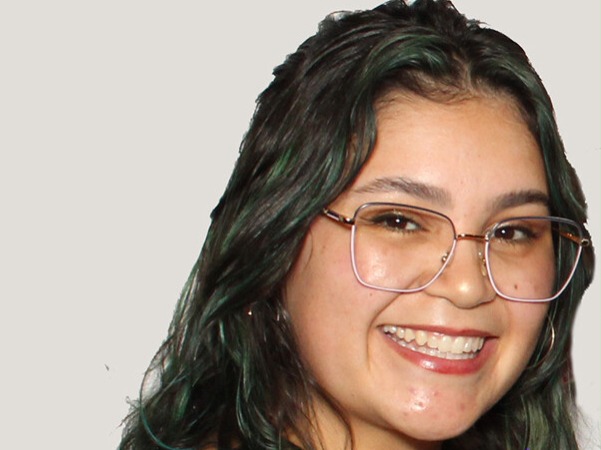
Clarice Blanco, a Ph.D. student in Rhetoric and Writing
John Slatin Prize for Electronic Media in Education
John Slatin was a professor of English and Rhetoric & Writing who served as the first Director of the Digital Writing and Research Lab. His scholarship and teaching not only examined inventive and accessible media but helped cultivate practices that produced them.
The Slatin Prize recognizes assistant instructors—both lab staffers and graduate students teaching RHE courses in/around DWRL classrooms—who have designed accessible and inventive teaching and learning activities.
2025-2026 Winner: Clarice Blanco
The committee selected Clarice Blanco as the 2026 winner of the Slatin Prize for Electronic Media in Education. Committee members were impressed both by the design of the visual syllabus and by the overall course that it outlines. This entry models effective use of digital tools for student engagement, while also reflecting a curriculum that thinks critically about digital environments. Reviewers consistently noted the instructor's attention to student needs and the opportunities she created for students to shape their own learning. In short, the submission exemplifies the combination of technological innovation and thoughtful pedagogy central to the DWRL.
- Previous Winners - 2020s
2024-2025 Maddie Bruegger 2023-2024 Kimberlyn Harrison 2022-2023 Jo Hurt 2021-2022 Hannah Hopkins 2020-2021 Matthew Breece - Previous Winners - 2010s
2019-2020 Sarah Welsh 2018-2019 Amy Tuttle 2017-2018 Justin Hatch 2017 Caroline Barta and Amy Vidor 2016 Lily Zhu 2015 Rhiannon Goad 2014 Lily Zhu 2013 Steven LeMieux 2012 Will Burdette 2011 Marjorie Foley, Scott Nelson, Chris Ortiz y Prentice, Andrew Rechnitz, and Cleve Wiese 2010 Matt King - Previous Winners - 2000s
2009 Sean McCarthy 2008 Nathan Kreuter and Jillian Sayre 2007 John Jones, Nathan Kreuter, Tim Turner, and Vessela Valiavitcharska 2006 John Pedro Schwartz 2004 Olin Bjork and Matthew Russell 2003 John Pedro Schwartz - I am required.Panel 4. Add body text in this space.
- Accordion 5Panel 5. Add body text in this space.
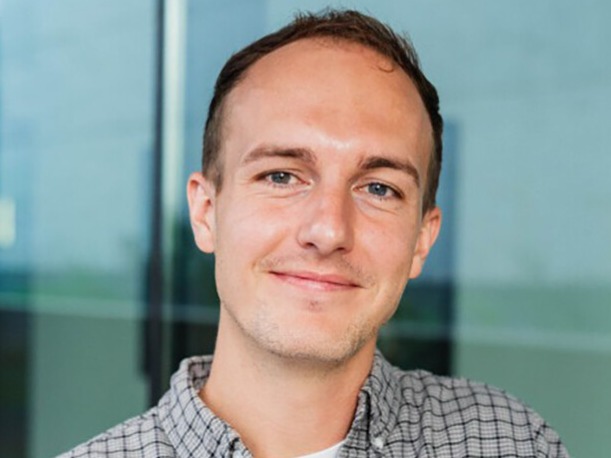
Trent Wintermeier, Ph.D. student in Rhetoric and Writing.
The Will Burdette Graduate Student Service Award
Created in the 2023-2024 academic year, the Will Burdette Graduate Student Service award is named for a Ph.D. graduate of the department who went on to serve as the Digital Writing and Research Lab (DWRL) coordinator for many, many years. Will will always remain an indespensible part of the DWRL and the DRW's history.
This award honors graduate students who demonstrate exemplary service to the Department of Rhetoric and Writing, the university, and the wider campus community.
2025-2026 Winner: Trent Wintermeier
Statement from the award committee: "This year’s recipient of the Will Burdette Service Award made our work easy as a committee—a small act of service in itself. Their service contributions span conference support, committee service, developing programming in and beyond the department, myriad everyday acts of care, mentorship, and community-building, and so much more. As one person says of them, 'This person will carry a box, sub your class, drive you to a power plant, and set up a committee for student involvement — all while insisting that it isn’t work at all. They do what they do because they love and believe in our people.'
There are a lot of visible, legible things that this person has done to serve our community, both in the discipline and in the department: providing support for the Graduate Research Network at Computers and Writing; coordinating the DIY Methods conference; serving on committees like the First-Year Forum and one of our recent search committees; serving as GSC rep, as a co-president of Eunoia, and to get the Rhetoric Graduate Group off the ground; launching the Zine Shop through the DWRL. There are also less visible things they do, like working behind the scenes to help organize the resource database for exams, connecting folks with the teaching and professional resources they need when they need them, and, as one person said becoming an 'indispensable presence in the DWRL, helping sustain its programming and collaborative work.' But as one person put it, 'Perhaps their greatest skill is their capacity to create community.' More than anything, the folks in this department said over and over that this person strives day in and day out to help build relationships through leadership, mentorship, and 'creating opportunities not just for engagement, but for play and joy.' As one person perfectly sums up, 'They always go out of their way to ensure the success of those around them.'
- Previous Winners
2024-2025 Hannah Hopkins 2023-2024 Jo Hurt - Accordion 2Panel 2. Add body text in this space.
- Accordion 3Panel 3. Add body text in this space.
- Accordion 4Panel 4. Add body text in this space.
- Accordion 5Panel 5. Add body text in this space.