
Past CLR Events
CLR at the No-Idea Festival:
The Displaced Commons
Saturday, November 5th, 2022 @ 7:30pm
Films, Concerts, Artist Q&A
Media Arts Center
2200 Tillery St #A, Austin, TX 78723
$12 at the door - UT students are free
CLR will co-sponsor the film/poetry/music event "The Displaced Commons" on November 5th as part of the No Idea Festival (Mexico City/Austin).
The event features the premiere of two short films, one by award-winning director Bani Khoshnoudi and one by a collective of Venezuelan filmmakers, with both pieces commissioned by the No Idea Festival. The films will be paired with an experimental ethnography/music collaboration on Venezuelan migration by Brent Crosson, Jacob Saheb and Maria Teresa Canelones. The music group Monte Espina will also play with Parham Daghighi.
Please join us. UT students are free. No registration required.
CLR at the No-Idea Festival:
Workshop with Bani Khoshnoudi
Saturday, November 5th, 2022 @ 10am
The Design Lab @ UT Austin
2301 Trinity Street, Austin, TX 78712
Email craig.campbell@utexas.edu to join
CLR will co-sponsor the film/poetry/music event "The Displaced Commons" on November 5th as part of the No Idea Festival (Mexico City/Austin).
Artisan Developing of Film & the Physical Traces of Ecological Materials on Emulsion,
a workshop with Bani Khoshnoudi
In this workshop we will explore how to use ecological development through artisanal processes like caffenol or phytograming as alternative ways of developing film, and how these aesthetic choices bring another instance of writing directly onto the film emulsion.
If you are interested in participating please contact the Bureau for Experimental Ethnography.
Email: craig.campbell@utexas.edu
This caption describes the image above.
Zoom Event - After Disaster: A Roundtable on Catastrophe in the Caribbean Longue Durée
April 27th, 2022, 12-1 PM CDT [GMT-5]
Caribbeanist Labs at the University of Texas-Austin
Free and open to the public - no registration required
Event Zoom Link | Meeting ID: 936 1105 7035
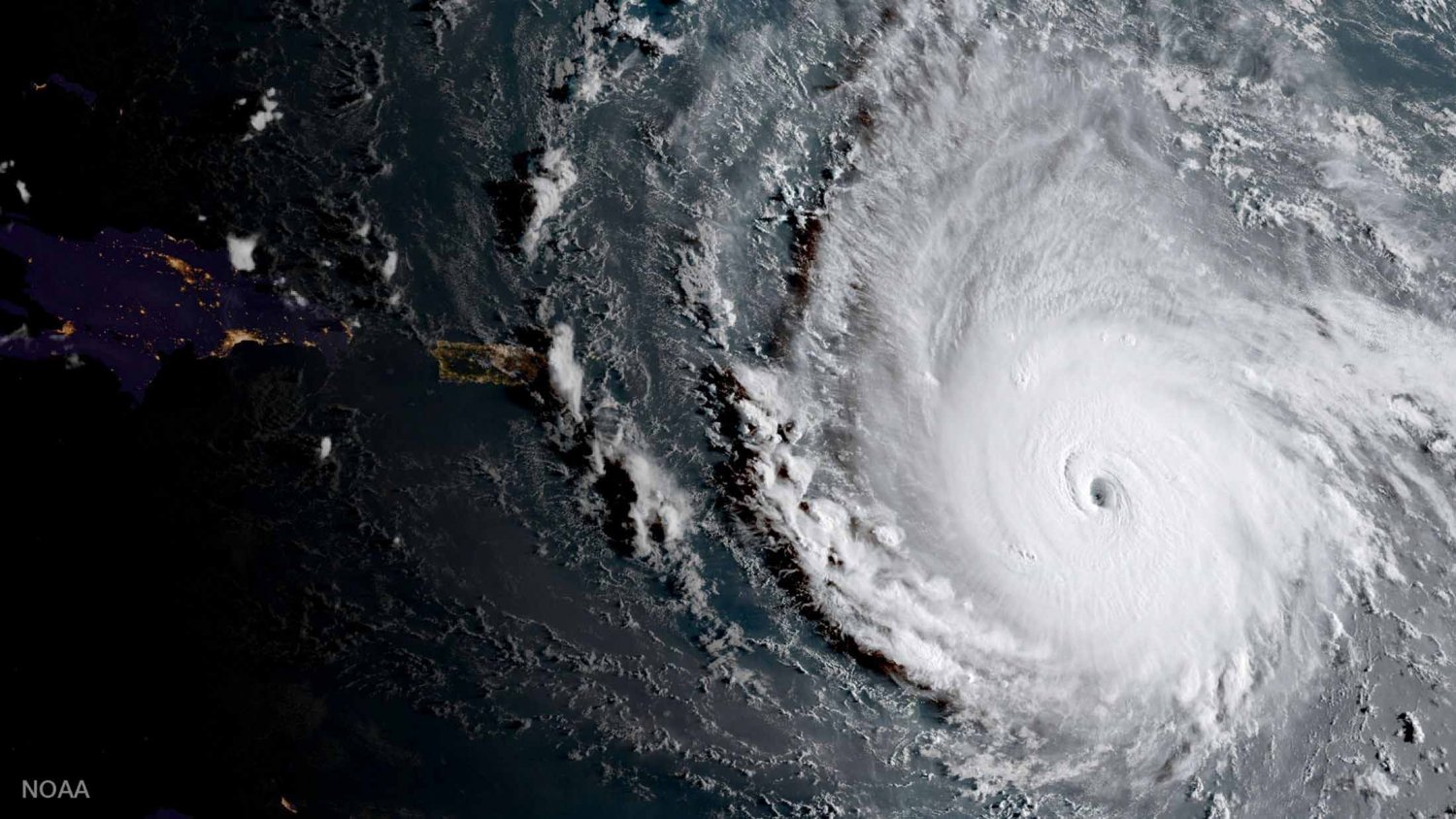
What happens after disasters in a region profoundly affected by disaster capitalism for the past five centuries? Was there a before to this disaster that we call colonialism in the Caribbean? How does disaster capitalism continue extractive economies in a present of climate change and intensified tropical cyclones? How might these disasters affect the region's relationship with the extraction, refining, religious cosmologies, or consumption of hydrocarbons? Looking at capitalism, plantation economies, geology, and environmental catastrophe in the longue durée, how can the Caribbean reshape a contemporary era fashioned after disaster?
Again, the panel's title "After Disaster" is intended to be generative in at least two ways:
1. What happens after disaster? This includes issues of disaster capitalism and the legacies of colonialism and plantation economies. How does disaster capitalism continue extractive economies in a present of climate change and intensified tropical cyclones? How might these disasters affect the region's relationship with the extraction, refining, or consumption of hydrocarbons?
2. To what extent can we speak about the Caribbean as a region fashioned after disaster--that is, fashioned in the image of a catastrophe? In what ways is this fashioning limiting and/or generative? How have narratives of disasters or catastrophes affected the ways the Caribbean as a region has been treated and imagined? Looking at capitalism, plantation economies, geology, and environmental catastrophe in the longue durée, how can the Caribbean reshape a contemporary era of anthropogenic destruction fashioned after disaster?
The panelists are:
Bedour Alagraa, African and African Diaspora Studies, UT Austin
Ryan Cecil Jobson, Anthropology, Univ. of Chicago
John Mussington, Activist and Educator, Barbuda
Carlos E. Ramos Scharrón, Latin American Studies, UT Austin
This caption describes the image above.
Burn! and Blue: Colonialism, Policing, and Tropicalization in Burn!, Jab!, and the Blue Rider Series
A Screening and Discussion Series for Caribbeanist Labs on Religion
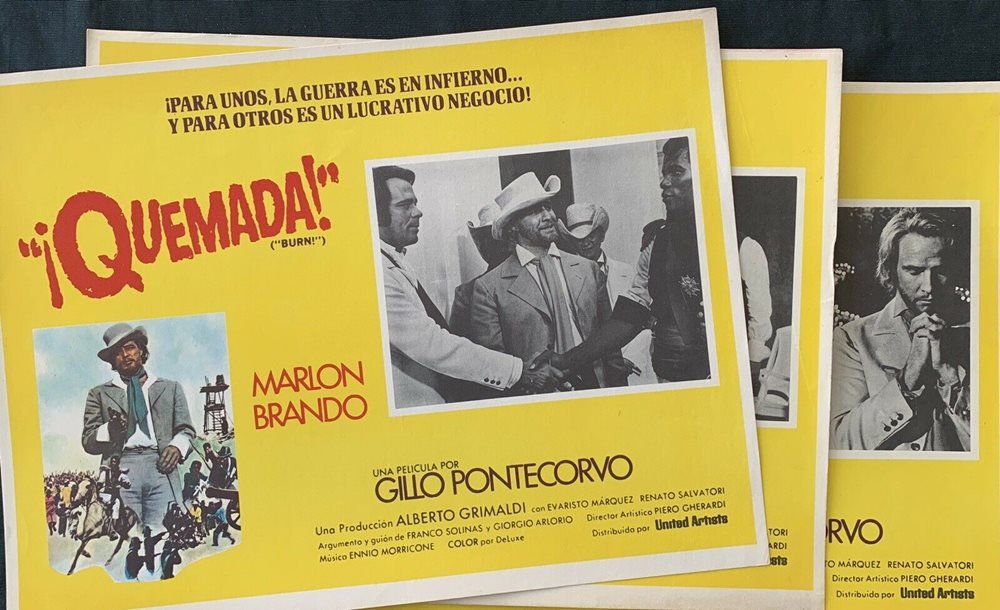
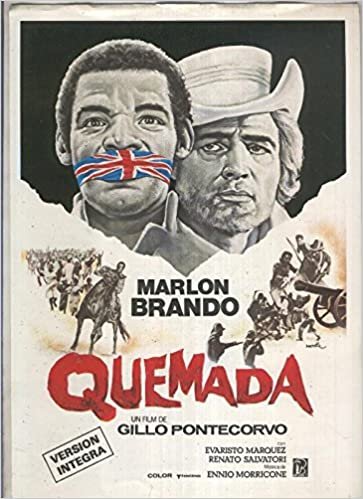
Screening 1: Burn!/Queimada/Quemada (1969)
Screening 2: Chris Ofili: Exploding the Crystal (2010)
Jab! The Blue Devils of Paramin (2006)
Evaristo Márquez and Marlon Brando star in famed director Gillo Pontecorvo’s lesser-known, Caribbean-based work Burn! (Queimada). Edward Said avowed that Burn!, alongside Pontecorvo’s better-known Battle of Algiers, “constitute a political and aesthetic standard never again equaled." Set on a fictional island in the Antilles, Burn! draws on the legacies of Iberian colonialism, the Haitian Revolution, and US and British interventions in the region to deliver an unforgettable work that bridges the region’s linguistic divides.
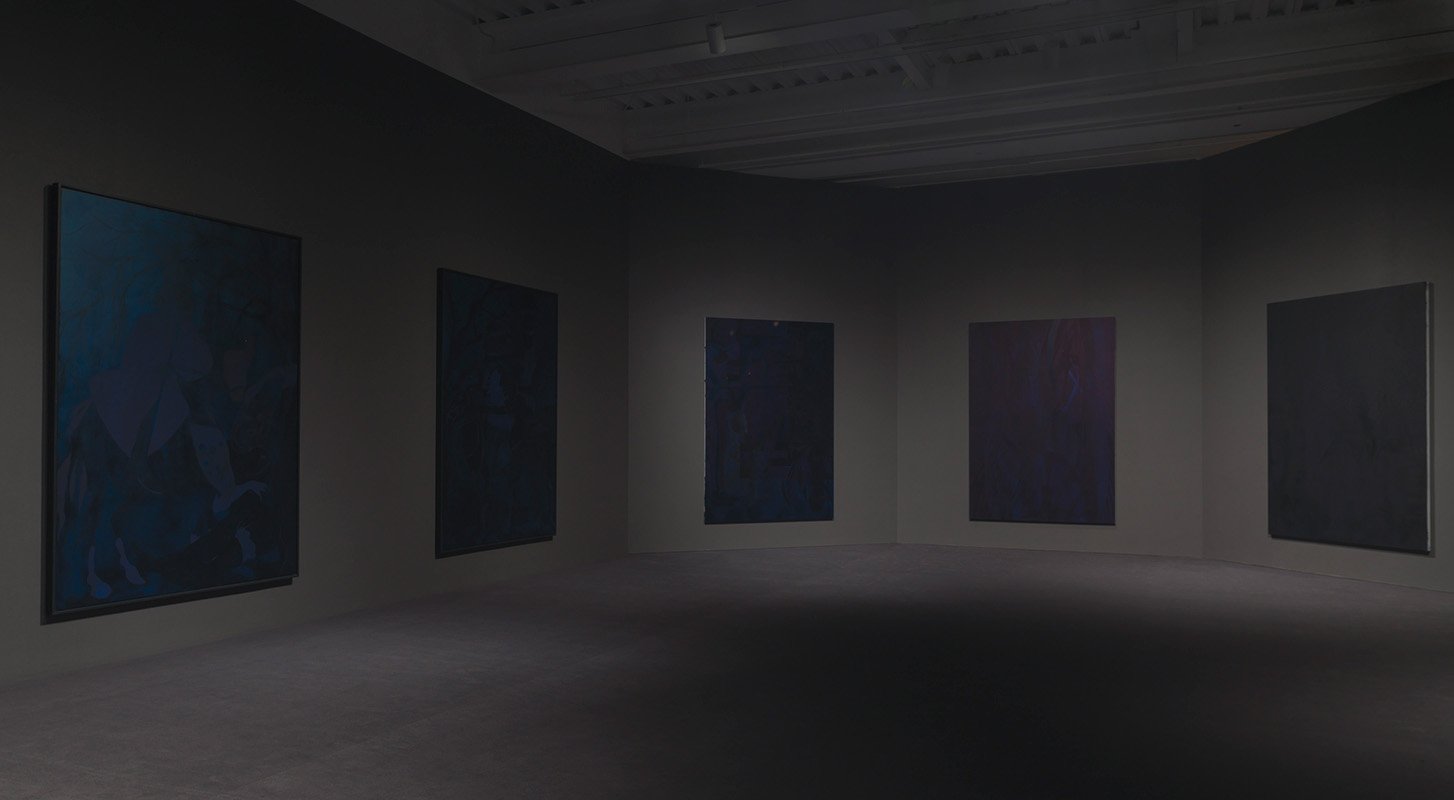
Forty years later, Black British artist Chris Ofili watches Burn! on the real Caribbean island of Trinidad, the artist’s adopted home. The film helps inspire him to produce a set of monochromatic blue paintings filled with Trinidadian cultural references (the Blue Rider Series)—works eventually displayed together in a darkened “chapel” for the artist’s retrospective at The New Museum of Contemporary Art in New York. In the dimmest of blue twilights, the soldiers of Burn! blend into scenes of modern-day police or arrested lovers, continuing the commentary on postcolonialism in the Caribbean and beyond. These paintings are again taken up by scholar-critic Fred Moten to reconsider what blues mean.
In Ofili’s adopted home of Paramin, Trinidad, other shades of blue congeal in the town’s infamous blue devils masquerade. The film Jab! (Trinidad English creole for “devil” from French and/or Spanish diable/diablo) details this ongoing practice of covering oneself in blue, a color that grants license to bend norms of gender, civilization, and other social categories. In Ofili’s monochromatic depiction of police violence, “Blue Devils,” this masquerade takes on different resonances, as the blue of police uniforms grants another kind of limit-bending violence.
We will pre-circulate a work-in-progress that draws on Burn!, Paramin’s blue devils masquerade, and Ofili’s blue paintings to to critically comment on the themes of colonialism, policing, and tropicalization in these works.
This caption describes the image above.
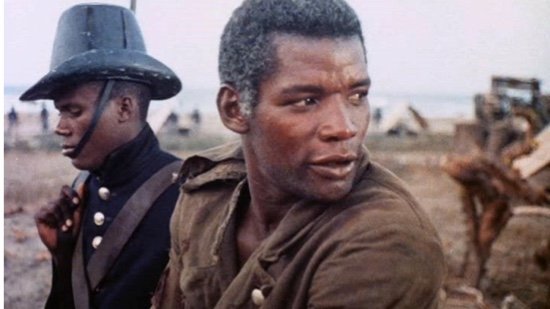
Evaristo Márquez as José Dolores
Screening 1
Burn!/Queimada/Quemada (English audio/Spanish subtitles)
Screening 2
Chris Ofili: Exploding the Crystal (English audio/English subtitles)
Jab: The Blue Devils of Paramin (Trinidad English Creole audio/English subtitles)
Film Descriptions:
Burn!/Queimada (dir. Gillo Pontecorvo 1969)
During the 1840s, Britain sends secret agent Sir William Walker (Marlon Brando) to break up Portugal's sugar monopoly on the fictional Caribbean island of Queimada. Walker incites the slaves to revolt under the leadership of a dock worker, José Dolores (Evaristo Márquez), while simultaneously convincing plantation owners to turn against the government. A decade later, however, Walker must return to Queimada to confront Dolores, who now leads a revolt to throw out the British.
This caption describes the image above.
Chris Ofili’s “Blue Chapel,” The New Museum, New York
Chris Ofili: Exploding the Crystal (Tate Galleries 2010)
From the Tate Galleries:
“Chris Ofili has built an international reputation with his works that bridge the sacred and the profane, popular culture and beliefs. His exuberant paintings are renowned for their rich layering and inventive use of media, including balls of elephant dung that punctuate the canvas and support them at their base, as well as glitter, resin, map pins and magazine cut-outs.
Ofili’s early works draw on a wide range of influences, from Zimbabwean cave painting to blaxploitation movies, fusing comic book heroes and icons of funk and hip-hop. For the first time, these celebrated paintings are presented alongside current developments in his practice following his move to Trinidad in 2005.
While adopting a simplified colour palette and pared-down forms, his recent works continue to draw on diverse sources of inspiration, and are full of references to sensual and Biblical themes as well as explore Trinidad’s landscape and mythology.”
Jab! The Blue Devils of Paramin (dir. Alex de Verteuill 2006)
Once a year at Carnival time Trinidad’s district of Paramin erupts into an inferno of blue-painted ‘jabs’ or devils. This 46-minute documentary, filmed in the two weeks leading up to Carnival, follows Kootoo, King Devil, as he prepares with his three brothers to once again win the village competition for the most convincing devil band. Known for his athletic prowess, and given to extraordinary feats like ripping up trees and scaling tall buildings, the charismatic Kootoo must still work hard with his band of devils to win the prize in the face of serious competition from a new generation of ‘jabs’. Will the brothers’ theme “Civilized Jabs” (i.e. devils in neckties carrying oversized cell phones) add a new twist to the masquerade and be enough for them to win?
This caption describes the image above.
This caption describes the image above.
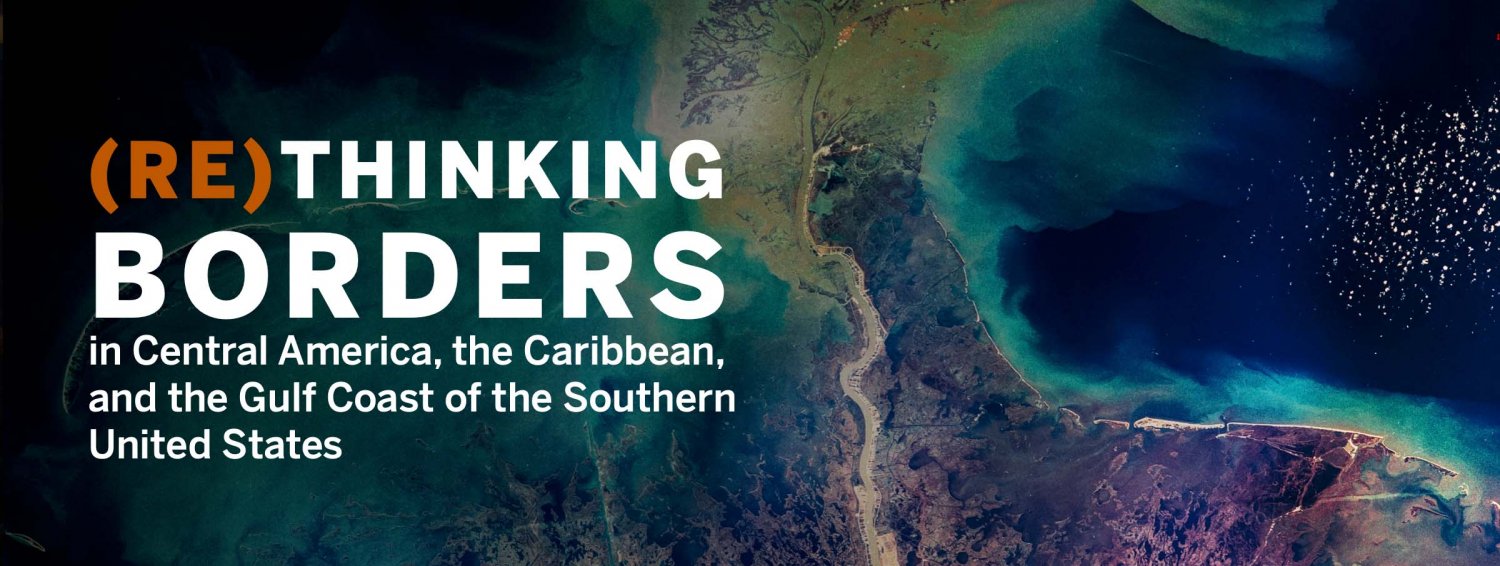
October 21 - November 4, 2021: (Re)Thinking Borders
Join scholars from around the world for an interactive three-part virtual series as we explore questions of construction and deconstruction of material and symbolical borders, in the pivotal space that links the United States, Central America, and the Caribbean. This unusual grouping will make for a unique exploration of the phenomena of border fragmentation and hybridity. Calling upon a broad theoretical understanding of borders, the seminar also invites us to think of this American crossroads as a space that is at once perceived, conceived, and lived, through a variety of cuts and junctions.
For more information, including registration: utx.global/borders
The audience can look forward to the following program:
Session 1. Drawing Borders: A Region at the Crossroads Between North and South?
Thursday, October 21, 2021, 10 a.m. – 12 p.m. CST ; 17 – 19 (Paris)
Moderation : Laurine Chapon University Sorbonne Nouvelle Paris 3, IdA, Funglode
Cédric Audebert, University of the Antilles,CNRS, “Fragmentation and Circulation within the Mesoamerican interface: the case of the Caribbean migratory system.”
Rosajilda Velez, Dominican Ministry of Economy, Unit of Social and Economic Policies in the Caribbean. “Loss of strategic relevance of the Caribbean zone.”
Eddy Tejeda, FLACSO, “Labor Migration in the Dominican Republic: state of the Haitian migration in the context of globalization.”
Registration
Session 2. Borders and (Hyper)Mobility at an American Crossroads: Toward New Territories
Thursday, October 28, 2021, 10 a.m. – 12 p.m. CST ; 17 – 19 (Paris)
Moderation : Eliott Ducharme, University Eiffel, IdA, CEMCA
Amarela Varela Huerta, UACM, “Immobility in the Americas. Life practices of moving people; and Death practices, or the counterinsurgency led by regional migration management. Notes from an ongoing process.”
Federico Besserer, UAM-I, “Hurried borders. A reflection on the (re)bordering of contemporary cities.”
Laurent Faret, University Paris Diderot, “Borderspace and restricted mobilities between Central and North Americas.”
Registration
Session 3. Drawing the Line: Representing Identities from the Borders of the Americas
Thursday, November 4, 2021, 10 a.m. – 12 p.m. CST ; 16 – 18 (Paris)
Moderation : Gabriel Daveau, University of Lille, IdA, UT Austin, Texas Global.
Brent Crosson, UT Austin, Religious Studies, “Between Trinidad and Venezuela”
Fernando Limón Aguirre, ECOSUR, “Territorialities and transborder dynamics of the chuj and q'anjob'al peoples.”
Registration