
A legacy of wisdom
Reflecting on the impact and insights of Dr Jennifer Glass
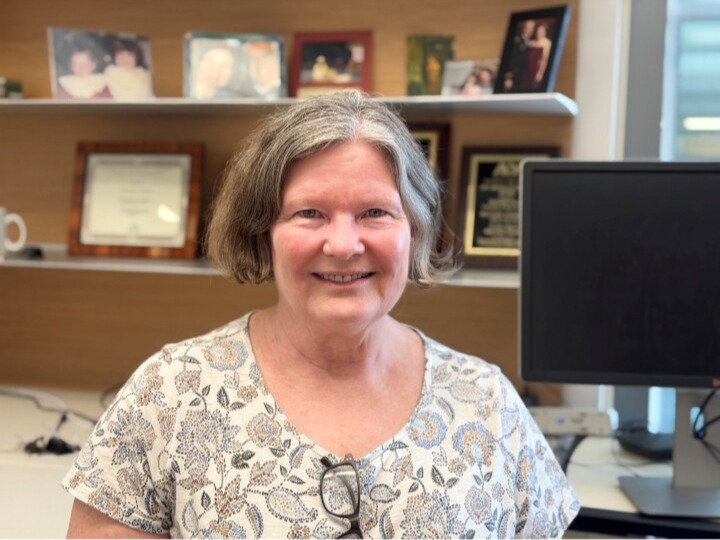
Jennifer Glass
Binda (B) Khatri
In this feature, I sat down with Dr. Jennifer Glass to reflect on her career, her passions, and what lies ahead.
Q: Was there a particular mentor, book or moment that shaped your intellectual direction?
Prof. Glass: I would have to say that in terms of rescuing me from the path that led out of graduate school and away from sociology it was without a doubt Sara McLanahan. She was not a very famous family demographer at the time but just a postdoc at the University of Wisconsin and I was a graduate student. We were both from Texas so we kind of bonded. When I was very discouraged, and about dropping out of graduate school, she introduced me to a scholar who became my mentor and I continued my academic journey.
Q: If you were to look at the very first dataset you ever analyzed as a grad student, what story was it trying to tell, and do you still care about that story today?
Prof. Glass: The first data set that I analyzed myself was the quality of employment survey of 1977. It gave all kinds of multidimensional information about jobs that we have never had before and that really motivated me ever since looking at the kind of gender and class diversity in employment and why certain people always seem to get stuck in the worst jobs.
Q: How did your interest in quantitative methods develop - was it intentional, accidental or gradual?
Prof. Glass: I think it was both accidental and gradual. I failed my first statistics class when I was an undergraduate. It was a mandatory statistics class, and the entire class failed the course because the teacher wasn't very good. When I went to graduate school, my first quantitative course professor, a rural sociologist named Glenn Fugitt, was brilliant and explained everything in a crystal-clear fashion and I understood it all. I realized that a good teacher could make statistics phenomenally easy and that I could do that for other people/students.
Q: Research is often a long, grueling process. Which project was the most intellectually rewarding for you personally?
Prof. Glass: It was the very first project and I was looking at a field that had not yet developed and didn't yet have a vocabulary: mothers in employment. I was able to answer with my data some intellectual questions that nobody else could answer at the time and then in the next 20 years they are just gazillions of surveys that started asking these questions.
Q: As you reflect on decades of teaching and research what wisdom would you share with the next generation of sociologists?
Prof. Glass: I would say think about the funding landscape if you want to continue to do research and try to look at grant writing and the raising of money to do research as preliminary organizational work for papers that you are going to write anyway. I always try to choose quantitative projects that if I get funding for will be great - if not, have a scale down version so that the effort of writing the grant proposal isn't completely wasted.
Q: If you could leave one piece of advice for the students, what would it be?
Prof. Glass: I would say keep small things small. I find myself saying that to people more often as I get older - remember that everything changes, whatever is going on this too shall pass, things that might seem horrible/detrimental/deflating/negative are oftentimes pretty small and you can let them go, and if you just keep focusing on what your ultimate goals are, like Martin Luther King said, “keep your eyes on the prize.”
Q: What part of your daily rhythm will you miss the most?
Prof. Glass: I will miss discovery the most. I love analyzing data and watching what comes out. I didn’t like the writing and publishing part much; I really like solving the puzzle part. I will probably replace that solving puzzle with The New York Times or something to keep my brain active. The most interesting part being in sociology is being able to solve the puzzles in society.
Binda (B) Khatri is a graduate student in the Department of Sociology at The University of Texas at Austin. She has taken courses with Professor Dr. Jennifer Glass and developed a strong interest in work and family sociology. B enjoys interviewing people and exploring individual experiences and perspectives. She is passionate about learning people’s stories and sharing them through writing.