
Our MFA
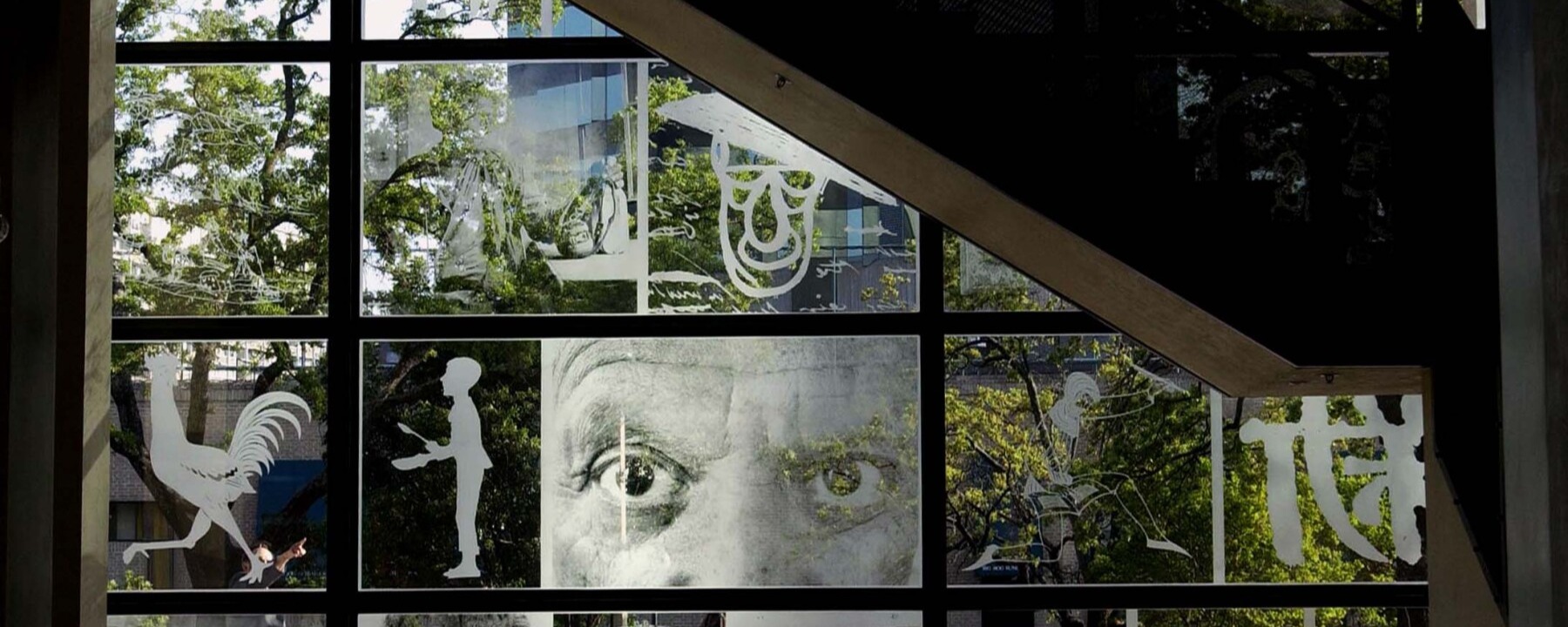
A studio MFA with the resources of a major university.
The New Writers Project offers students a close-knit MFA community, located in one of the most creative and vibrant literary arts cities in the country, Austin, Texas. In addition to our dedicated and award-winning faculty in Fiction and Poetry, our students have access to a wealth of resources at UT. Our program is located in Calhoun Hall, adjacent to the renowned Harry Ransom Center Archive and within walking distance of multiple UT Libraries System locations. Our students also benefit from our close affiliation with the Michener Center for Writers, as they have access to MCW courses, speaker events, and professional development seminars.
All students receive three years of full funding—including tuition, insurance, and an annual stipend—allowing them to focus on their writing while gaining valuable experience teaching at the collegiate level. Students teach Literature and Creative Writing during their first 5 semesters in the program, then spend their final semester on a full, non-working fellowship. They can gain editing experience by working with the UT Literary Journal Bat City Review, and have the opportunity to read their work annually in our NWP Student Reading Series.

Photo Credit.
Admissions
Admissions for Fall 2027 are now open! The deadline to apply is December 1st, 2026.
How to ApplyPhoto Credit.
Support
PLAN OF STUDY
The MFA program requires a total of 48 hours of coursework, typically fulfilled through 16 three-credit courses, which students take across three years (six semesters, three courses per semester). Our students take several different kinds of courses and seminars to fulfill the course requirements. Writing workshops are the most important part of your coursework and are meant to provide a supportive and challenging environment in which you receive and provide constructive criticism. Our students also take Literature for Writers/Studies seminars offered by NWP faculty and visiting writers. Covering a wide range of topics, these seminars involve significant critical reading, writing, and analysis from a practitioner’s point of view.
In addition to the MFA programs’ workshops and seminars, students find a wide variety of graduate literature courses available through the Department of English. NWP students regularly enroll in non-creative writing graduate courses, and while Ph.D. students typically make up the majority of students in these classes, students will also find other writers as well as students from other departments (Comparative Literature, Art History, Anthropology, American Studies, etc.) in these courses. According to their particular interests and research, NWP students also take courses (mostly graduate, but occasionally undergraduate) in other departments university-wide.
THE THESIS
Each student earning an MFA is required to complete a master’s thesis, a significant collection of polished creative work representative of your time in the program. For some students, it will be a book-length manuscript (novel, story, or poetry collection); for others, it will be a substantive body of work not yet in manuscript form. Decisions about the nature of your thesis will be made in consultation with your thesis advisor. Although students may decide to take organized coursework every semester, students in their final year of the program typically enroll in thesis hours, which provide dedicated time for students to prepare their theses.
The New Writers Project discourages its students from switching genres or degree programs, since this may lead to additional coursework and/or extended enrollment. We expect our students to submit their Thesis in the genre (fiction or poetry) they specified in their applications. Students who wish to change genres before or during their study need the approval of two members of the creative writing faculty and the director of the New Writers Project.
FUNDING
All students in the New Writers Project receive three years of full funding through a combination of teaching assistantships (TA), assistant instructorships (AI), and fellowship support. The complete package includes full tuition remission, health insurance, and a salary or fellowship stipend. In addition to providing funding, these appointments offer invaluable opportunities for our students to gain creative and professional development.
During the first two years of the program, students serve as teaching assistants for survey courses in American, British, and World Literature in the Department of English. During their final year, the funding package is as follows: for one semester, students TA or AI in a Creative Writing course; for the other semester, students receive a full fellowship equivalent to one semester of TA salary. The fellowship comes with no responsibilities other than to concentrate on the thesis.
The 9-month TA stipend for the 2024-2025 academic year is $20,760. The 9-month AI stipend for for the 2024-2025 academic year is $22,995. UT provides all eligible Academic Graduate Student employees with 100% premium support for AcademicBlue SHIP, the student health insurance plan. You can learn more about UT Academic Graduate Student Employee insurance options here.
In recent years, we have been able to award all NWP students $4,000 of total summer funding through the generous support of the Crawley Research Grant program and through the Department of English. While this funding is renewed annually, we anticipate its continuation. UT alumnus John Crawley created the grant as his way of giving back to the creative writing program that influenced his student life and future career.
In order to remain in the MFA program and to maintain their funding package, students must be making adequate progress toward their degree. This includes maintaining at least a 3.0 GPA; fulfilling core requirements in a timely fashion; and adhering to the university’s codes of conduct, academic integrity, and compliance and ethics guides, including not behaving in a manner that impedes, interferes with, or disrupts any University teaching, research, administrative, learning, or other authorized activity. Failure to meet any of these standards may result in non-renewal of funding or termination from the program.
Renewed on a semester-by-semester basis, financial support via fellowship and employment as a TA/AI is contingent upon making adequate progress toward the degree and upon fulfilling the TA/AI responsibilities to the satisfaction of supervising faculty and the Graduate Advisor. Additionally, TA/AI appointments require students to maintain full-time graduate student status and availability for work onsite in Austin, TX, at UT Austin main campus.
Awards
Each year, several contests and awards are available to our students:
- Keene Prize for Literature
Keene Prize for Literature
Available to all currently enrolled UT students, this annual prize in creative writing accepts submissions in fiction, poetry, drama, and nonfiction prose. The winner receives $50,000, and three runners-up divide another $50,000. Established through an estate gift from UT graduate E.L. Keene, the Keene Prize stands as the most generous student-writing award in the country.
- Michael Adams Thesis Prize
Michael Adams Thesis Prize
The Michael Adams Prize, selected by distinguished external judges, gives yearly awards to one fiction and one poetry thesis. The award typically comes with a $1,000 to $2,000 prize.
- Andrew Julius Gutow Academy of American Poets Prize
Andrew Julius Gutow Academy of American Poets Prize
As one of the Academy of American Poets University and College Poetry Prizes, the Andrew Julius Gutow Academy of American Poets Prize recognizes the achievement of an undergraduate and a graduate student at the University of Texas at Austin. Each winner will receive $100 and a one-year membership to the Academy of American Poets. Winners 23 years old or younger will also be considered for the Academy’s Aliki Perroti and Seth Frank Most Promising Young Poet Award. The winner of the Aliki Perroti and Seth Frank Most Promising Young Poet Award will receive $1000.
- Accordion 4Panel 4. Add body text in this space.
- Accordion 5Panel 5. Add body text in this space.
BAT CITY REVIEW
Students in the New Writers Project can gain editing experience with Bat City Review, the UT literary journal run entirely by UT graduate students. The English Department offers a graduate course titled "Practicum in Editing", which serves as an introduction to editing and managing a literary journal.
Issue 18 of Bat City Review is available now.
Past Bat City Review contributors include Tomaž Šalamun, Dara Wier, James Tate, Patricia Lockwood, Noelle Kocot, Zachary Schomburg, Matthew Zapruder, Mary Jo Bang, Maurice Manning, Colm Tóibín, Stephen Dunn, Aimee Bender, George Saunders, H.L. Hix, Dorianne Laux, Terrance Hayes, Ron Savage, Denise Duhamel, Marilyn Hacker, Ben Lerner, C.K. Williams, Thylias Moss, Craig Arnold, G.C. Waldrep, Shane McCrae, James Gendron, Donald Revell, Terese Svoboda, Khaled Mattawa, Tracy K. Smith, and Anthony Doerr.
- Three Years of Full Funding
All students in the New Writers Project receive three years of full funding through a combination of teaching assistantships (TA), assistant instructorships (AI), and fellowship support. The funding package includes full tuition remission, a salary or fellowship stipend, and health insurance.
- Teaching Assistant & Assistant Instructor Appointments
NWP students learn valuable skills in their first two years in the program while serving as teaching assistants for courses in American, British, or World Literature. During their third year, our students spend one semester as a TA or AI for a Creative Writing course. In addition to providing funding, these appointments offer invaluable opportunities for our students to gain creative and professional development.
The nine-month College of Liberal Arts TA stipend for the 2024-2025 academic year is $20,759. The nine-month College of Liberal Arts AI stipend for the 2024-2025 academic year is $22,994.
- NWP Writing Fellowship
During their final semester, students receive a non-working full Fellowship equivalent to one semester of TA salary. This fellowship comes with no responsibilities other than completing the Master's Report. Students also receive full tuition remission and a stipend for health insurance during the final semester.
- Health Insurance
The University of Texas at Austin provides all eligible Academic Graduate Student employees with 100% premium support for AcademicBlue SHIP, the student health insurance plan. Learn more about UT Academic Graduate Student Employee insurance options here. Students receive continuous coverage during their three years in the program.
- I am required.I am required.
Degree Plan
MFA in Creative Writing
The New Writers Project MFA in Creative Writing requires students to take a total of 48 hours of coursework, 27 of which are Creative Writing Workshops and Seminars. In their third year, students complete a Creative Writing Pedagogy Course. In addition to these courses, students may take a number of electives, which can include additional workshops and seminars, graduate-level English Literature classes, a Practicum in Editing course with Bat City Review, or graduate courses outside the Department of English. Students often find coursework that intersects with their writing in Comparative Literature, Art History, Anthropology, American Studies, and other areas. Depending on their interests and research, students also take courses (mostly graduate, but occasionally undergraduate) in other departments across the university. Our Graduate Student Handbook can be found here.
MFA Master's Report
To earn their MFA, each student must complete a Master's Report (often referred to as the thesis), consisting of a significant collection of polished creative work representing their time in the program. Students take a year-long conference course focused on completing their Master's Report, which is supervised by a member of our core faculty. For some, the report will be a book-length manuscript (novel, story or poetry collection); for others, it may be an accomplished body of work not yet in manuscript form. Students will decide the direction of their report with the help of their faculty supervisor.
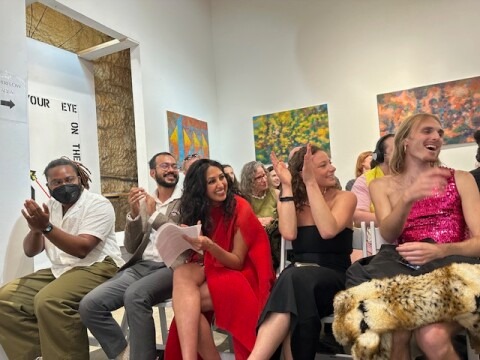
Photo Credit.
NWP Student Reading Series
Our NWP reading series—held at the locally beloved bookstore, Alienated Majesty Books, gives each NWP cohort the chance to present their work to the pulic each year.
Upcoming Events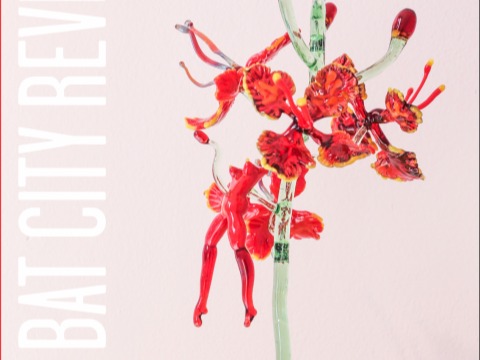
Photo Credit.
Bat City Review
Founded in 2004, the UT literary journal is collaboratively edited by MFA candidates from the New Writers Project, Michener Center for Writers, and Studio Art.
Visit BCR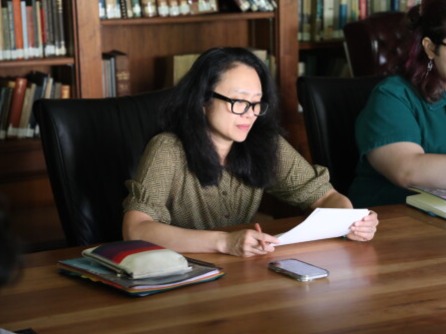
Photo Credit.
NWP Faculty
Students receive close mentorship from our engaged and award-winning faculty in Fiction and Poetry.

Photo Credit.
Photo Credit.
Photo Credit.
Photo Credit.
Photo Credit.
Photo Credit.
Photo Credit.